Eid ul Fitr 2026: Everything You Need to Know About the Festival of Breaking the Fast
Eid al-Fitr is one of the most joyful and spiritually significant occasions in the Islamic calendar. After an entire month of fasting, prayer, and reflection during Ramadan, Muslims around the world come together to celebrate the Festival of Breaking the Fast. In 2026, Eid al-Fitr is expected to fall on Friday, March 21, marking the end of Ramadan 1447 AH and the beginning of a day filled with gratitude, generosity, and togetherness.
Whether you are preparing for your very first Eid or looking to deepen your understanding of this beautiful celebration, this guide covers everything from the spiritual significance of the day to its most cherished customs, foods, and modern ways of celebrating with family and friends. al-Fitr,
What is Eid al-Fitr? The Meaning Behind the Celebration
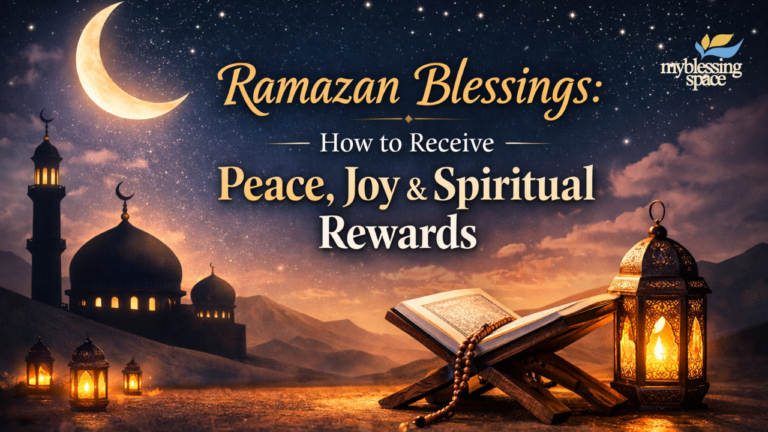
Eid ul Fitr, which translates from Arabic as “Festival of Breaking the Fast,” is observed on the first day of Shawwal—the tenth month of the Islamic lunar calendar. It immediately follows the holy month of Ramadan, during which Muslims fast from dawn to sunset, engage in extra prayers, and strive for spiritual growth.
The holiday is not simply the end of a religious obligation. It is a deeply communal expression of gratitude to Allah for granting the strength to complete the fast. The Prophet Muhammad (PBUH) introduced the celebration of Eid al-Fitr after he migrated to Madinah, where he found the people already celebrating two days of festivity. He replaced those days with Eid al-Fitr and Eid al-Adha, as narrated in the hadith literature compiled by Abu Dawud and An-Nasa’i.
The word “Eid” itself means “recurring happiness” or “festivity,” which perfectly captures the spirit of a day that comes around once a year to reunite hearts and homes.
When is Eid al-Fitr 2026?
Eid ul Fitr 2026 is expected to be observed on Friday, March 21, 2026, subject to the sighting of the crescent moon on the evening of March 20, 2026. The Islamic calendar is lunar-based, meaning that the start of each month depends on the actual sighting of the new crescent moon, which can vary by one day depending on location and local moon-sighting committees.
Countries like Saudi Arabia, the UAE, Pakistan, India, Bangladesh, and others may declare slightly different dates based on their local religious authorities. Muslims in North America often follow either the Saudi announcement or rely on calculated astronomical data through organizations like the Fiqh Council of North America.
If you are unsure about the confirmed date in your region, it is best to check with your local mosque or Islamic center closer to March 20, 2026.
The Spiritual Importance of Eid al-Fitr
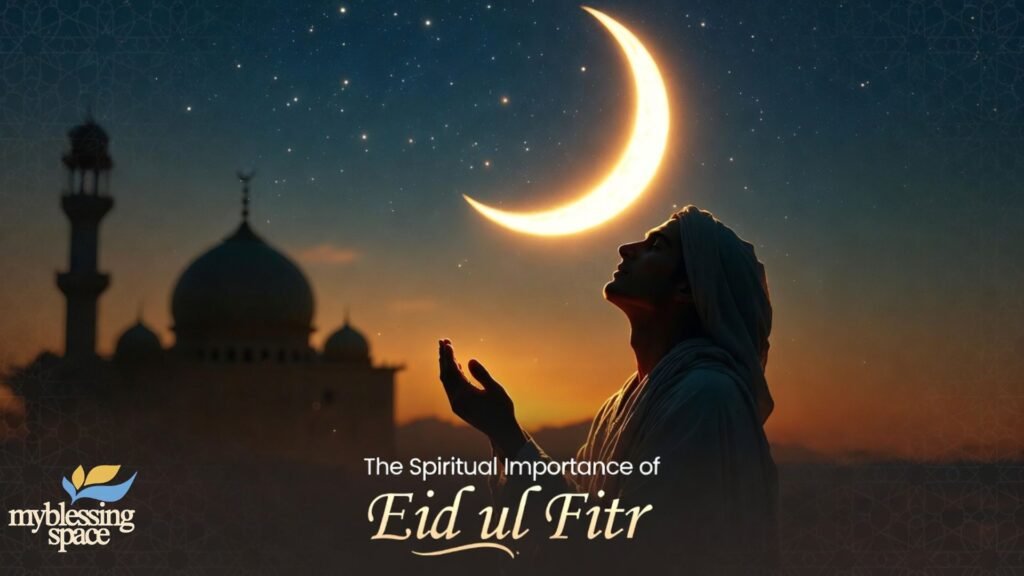
A Day of Gratitude and Completion
The night before Eid — known as Laylat al-Jaiza or “the Night of Reward” — is considered a time when Allah’s mercy and blessings are especially abundant. Muslims are encouraged to stay up in prayer and remembrance of Allah on this night, as many classical Islamic scholars described it as one of the most blessed nights of the year.
Eid morning begins with the recitation of the Takbeer—”Allahu Akbar, Allahu Akbar, La ilaha illallah, Allahu Akbar, Allahu Akbar, wa lillahil hamd.” This phrase, glorifying Allah’s greatness, is repeated from the moment the crescent moon is sighted until the Eid prayer is performed.
The Obligation of Zakat ul Fitr
One of the most important religious duties connected to Eid al-Fitr is the payment of Zakat ul Fitr (also called Sadaqat al-Fitr). This is a mandatory charitable contribution that every Muslim who has food in excess of their own needs must give before the Eid prayer. It is typically given in the form of staple food items or their monetary equivalent.
The purpose of Zakat ul Fitr is to purify the fasting person from any shortcomings during Ramadan and, crucially, to ensure that the poor and needy can also celebrate Eid with joy and dignity. The National Zakat Foundation and many other Islamic organizations facilitate the collection and distribution of Zakat ul Fitr to those in need worldwide.
How to Perform the Eid Prayer
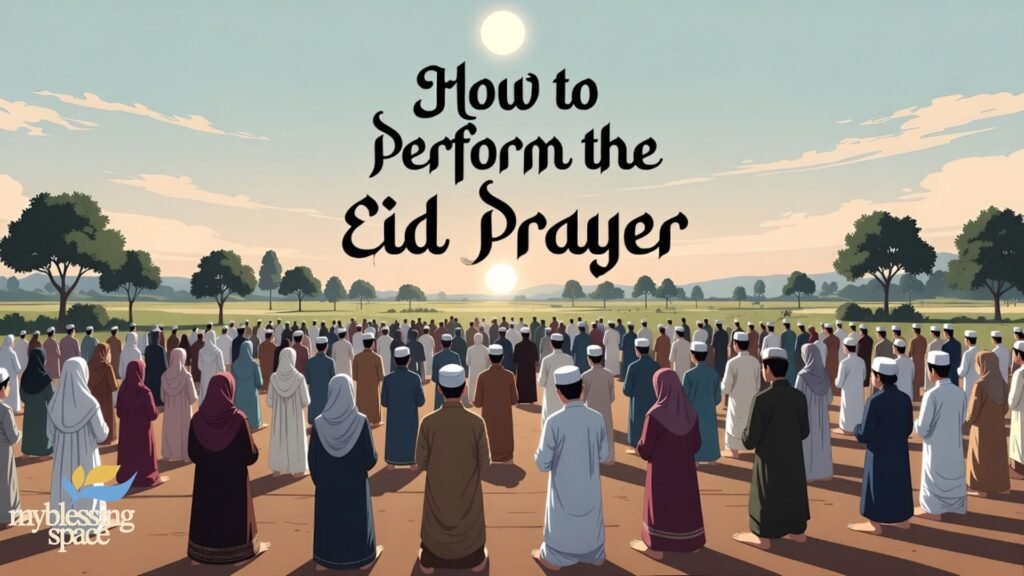
Preparation Before the Prayer
On the morning of Eid, Muslims follow a set of recommended practices before heading to the mosque or Eid prayer ground (Eidgah):
- Take a full bath (ghusl)
- Wear one’s best or new clothing
- Apply perfume (for men)
- Eat something sweet before leaving for prayer — traditionally odd numbers of dates, following the sunnah of the Prophet (PBUH)
- Go to the prayer by one route and return by another
The Structure of Eid Salah
The Eid prayer consists of two rak’ahs with additional takbeers (repetitions of “Allahu Akbar”) beyond the standard prayer. In the first rak’ah, seven additional takbeers are said after the opening takbeer. In the second rak’ah, five additional takbeers are said before the Quranic recitation.
After the prayer, the imam delivers a khutbah (sermon) on topics relevant to the Muslim community — a moment that carries particular importance, especially in times of global challenges and trials.
Eid al-Fitr Traditions Around the World
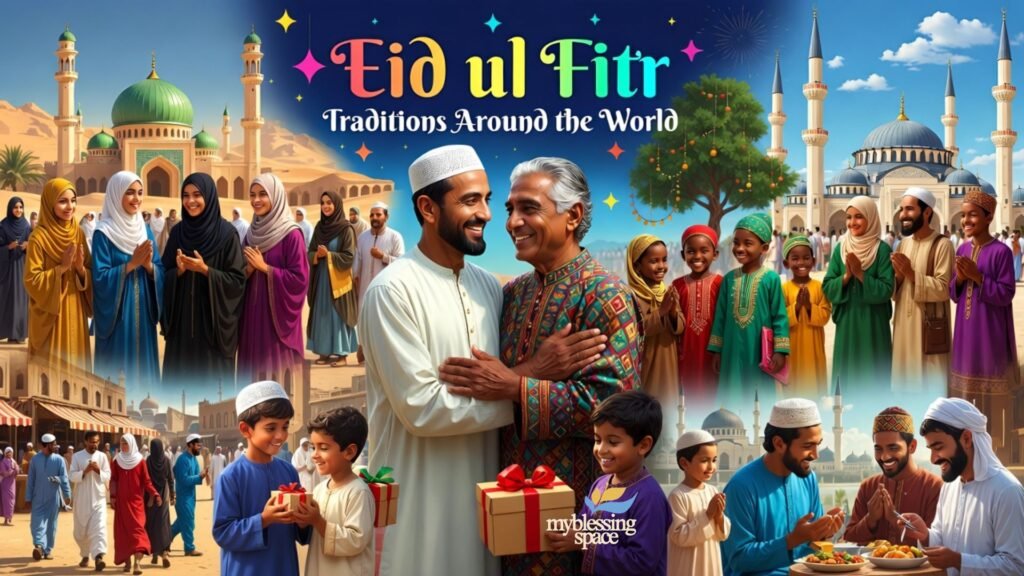
South Asia: Pakistan, India, and Bangladesh
In Pakistan, India, and Bangladesh, Eid is a multi-day affair. Bazaars light up for weeks before Eid as people shop for new clothes, bangles, mehndi (henna), and sweets. The phrase “Eid Mubarak”—meaning “Blessed Eid”—fills the air as families visit each other throughout the day.
Children look forward to Eid al-Fitr, the tradition of elders gifting money to younger family members. Traditional sweets like sheer khurma (a rich vermicelli pudding with dates and milk), sewaiyan, and kheer are prepared in nearly every household.
Middle East
In countries like Saudi Arabia, Egypt, and Turkey, Eid celebrations are vibrant public events. Streets are decorated with lights and banners, amusement parks are packed with children, and the smell of fresh-baked goods fills every neighborhood. In Turkey, the holiday is called Ramazan Bayramı, and it is traditional to visit the graves of deceased family members on Eid morning as a mark of respect.
Southeast Asia: Indonesia and Malaysia
Indonesia and Malaysia celebrate Eid—known locally as Hari Raya Idul Fitri or Hari Raya Aidilfitri—with grand family gatherings called open houses, where guests of all backgrounds are welcomed to share food and festivities. The tradition of returning to one’s hometown (mudik in Indonesia) is so significant that it results in one of the largest human migration events in the world each year.
Western Muslim Communities
Muslims in Europe, North America, and Australia celebrate Eid with growing visibility and community pride. Large Eid prayers are held in parks, convention centers, and stadiums. Cultural festivals, charity drives, and interfaith events mark the day as communities blend religious observance with civic participation.
Traditional Eid Foods You Must Try
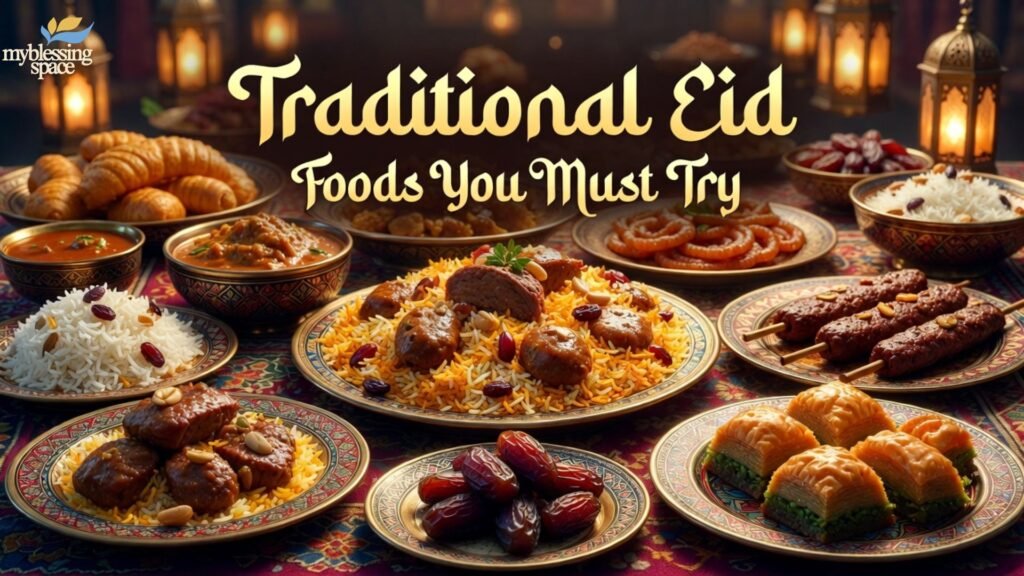
Food is at the heart of every Eid celebration. Across the Muslim world, families prepare dishes that have been passed down through generations, each one carrying a unique flavor of heritage and love.
Sheer Khurma
This sweet, creamy dish made with thin vermicelli noodles, whole milk, dates, and aromatic spices is perhaps the most iconic Eid morning food across South Asia and Central Asia. The name itself means “milk with dates” in Persian, and it is typically prepared in large quantities to be shared with neighbors and guests throughout the day.
Biryani
No Eid lunch is complete without a fragrant pot of biryani. Whether it is the slow-cooked dum biryani of Hyderabad, the spice-forward Karachi biryani, or the coconut-infused variety from Malabar, this layered rice and meat dish is the undisputed king of the Eid table.
Maamoul (Date-Filled Cookies)
Popular across the Levant and North Africa, maamoul are delicate shortbread cookies stuffed with dates, walnuts, or pistachios and dusted with powdered sugar. Families often prepare batches weeks in advance and gift them in beautifully decorated boxes.
Baklava and Kunafa
Sweet pastries dripping with honey and rose water are essential Eid treats in the Middle East and Turkey. Baklava, with its layers of paper-thin phyllo dough and chopped nuts, and kunafa, a warm cheese-filled pastry soaked in sugar syrup, are available in shops and shared generously among neighbors.
Eid Greetings: What to Say and How to Say It
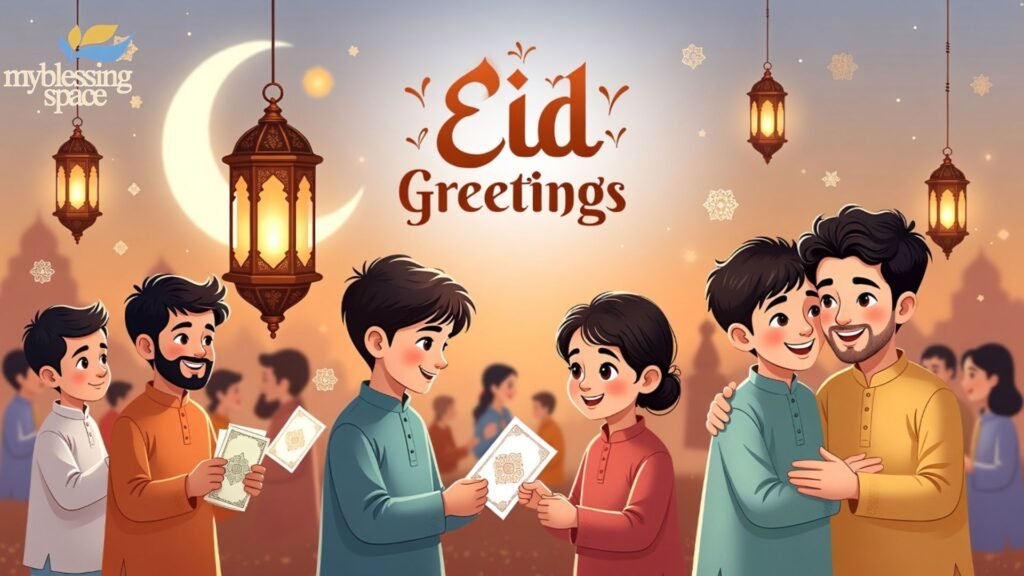
The most common Eid greeting is “Eid Mubarak” (Blessed Eid), used across the Arabic-speaking world and widely understood by Muslims everywhere. In response, you can say “Khair Mubarak” or simply “Eid Mubarak” in return.
Other popular greetings include:
- “Eid Said”—Happy Eid (Arabic)
- “Eid Mubarak ho”—May Eid be blessed for you (Urdu/Hindi)
- “Selamat Hari Raya”—Happy Eid (Malay/Indonesian)
- “Bayramınız mübarek olsun”—May your holiday be blessed (Turkish)
- “Kul ‘am wa antum bi-khayr”—May you be well throughout the year (Arabic)
These phrases carry genuine warmth, and sharing them with friends, coworkers, and neighbors — whether in person, by message, or on social media — is one of the simplest ways to spread the joy of Eid.
Meaningful Ways to Celebrate Eid al-Fitr in 2026
Give Generously
Eid is intrinsically tied to giving. Beyond Zakat ul Fitr, consider donating to causes that help those in conflict zones, refugee camps, and impoverished communities experience some of the joy of Eid. Organizations like Islamic Relief run dedicated Eid campaigns that deliver food parcels, gifts, and new clothes to children in need across dozens of countries.
Reconnect with Family
In the rush of modern life, Eid offers a rare and precious opportunity to visit grandparents, call distant relatives, and mend strained relationships. The Prophet (PBUH) placed immense emphasis on silat ur rahim—maintaining ties of kinship—and Eid is the perfect time to honor that teaching.
Dress in your best.
Wearing new or clean clothes on Eid is a well-established sunnah. Many families make a tradition of shopping together in the weeks before Eid, choosing matching outfits, embroidered shalwar kameez, or flowing abayas and thobes that make the day feel truly special.
Host or Attend an Open House
Throwing open your doors to neighbors, coworkers, and friends — regardless of their faith — is one of the most beautiful expressions of Eid’s communal spirit. A simple spread of sweets, tea, and savory bites can create lasting memories and deepen community bonds.
Eid Gifts: Ideas for Everyone on Your List
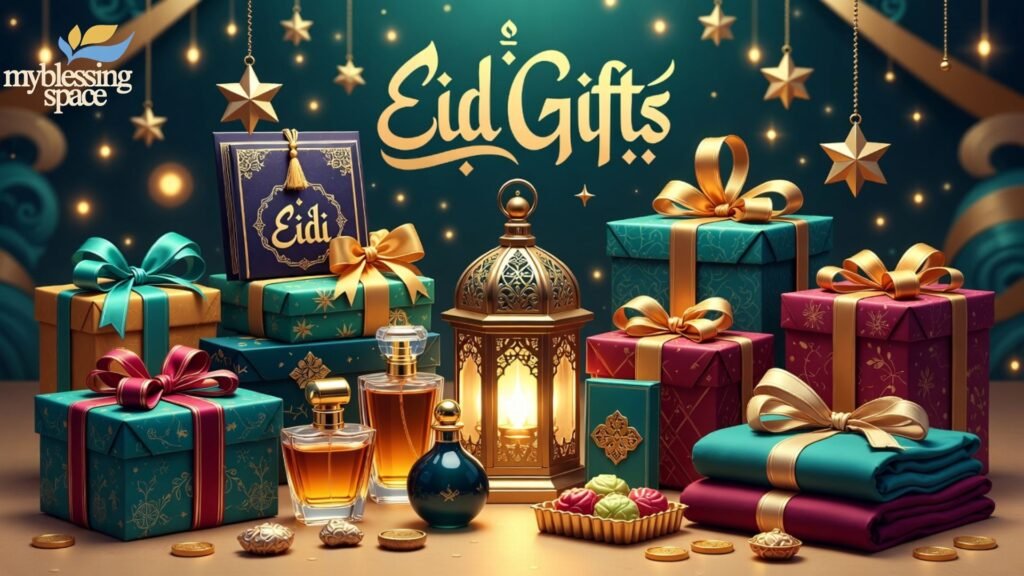
Gift-giving is increasingly popular on Eid, especially for children. Here are some thoughtful ideas:
- For children: Books about Islamic stories and prophets, prayer sets, educational toys, and, of course, Eid money in a decorated envelope
- For adults: High-quality dates and sweets, perfume (attar), prayer beads (tasbeeh), books by contemporary Muslim scholars
- For the home: Calligraphy art with Quranic verses, decorative lanterns, or a beautiful prayer rug
- For someone far away: A digital gift card, subscription to an Islamic learning platform, or a heartfelt handwritten letter
FAQs About Eid al-Fitr 026
Q1: When is Eid al-Fitr 2026?
Eid al-Fitr 2026 is expected on Friday, March 21, 2026, subject to moon sighting on the evening of March 20. The date may vary by one day in different countries.
Q2: How many days is Eid al-Fitr?
Officially, Eid al-Fitr is one day, the first of Shawwal. However, in many Muslim-majority countries, public holidays extend for two to three days to allow for full family celebrations.
Q3: What is Zakat ul Fitr? When should it be paid?
Zakat ul Fitr is a mandatory charitable contribution that must be paid before the Eid prayer. It is equivalent to approximately 2.5 kg of a staple food or its cash value. It must be paid on behalf of every member of the household.
Q4: Can non-Muslims celebrate Eid with Muslim friends?
Absolutely. Eid is a time of open doors and shared joy. Non-Muslim friends and neighbors are warmly welcomed to join in the festivities, share a meal, and exchange greetings.
Q5: What do you eat on Eid morning?
Following the sunnah of the Prophet (PBUH), it is recommended to eat an odd number of dates before the Eid prayer. In South Asian cultures, sheer khurma or sewaiyan is the traditional breakfast. In Arab countries, sweets and pastries are common morning treats.
Q6: What is the difference between Eid al-Fitr and Eid al-Adha?
Eid al-Fitr marks the end of Ramadan and celebrates the completion of fasting. Eid al-Adha, the “Festival of Sacrifice,” occurs approximately 70 days later during the Islamic month of Dhul Hijjah and commemorates the willingness of Prophet Ibrahim (AS) to sacrifice his son as an act of obedience to Allah.
Q7: Is fasting allowed on Eid al-Fitr?
No. Fasting on the day of Eid al-Fitr is haram (forbidden in Islam). This prohibition is a mercy from Allah, signaling that the time for restriction has ended and the time for celebration has begun.
Q8: How do you wish someone “Eid Mubarak”?
You can say “Eid Mubarak” verbally, via text message, or on social media. The response is typically “Eid Mubarak” or “Khair Mubarak.” A warm hug or handshake (between those of the same gender) is also a traditional Eid greeting.
Conclusion: Embrace the Spirit of Eid al-Fitr 2026
Eid al-Fitr is far more than a single day on the calendar. It is the culmination of a month of discipline, devotion, and drawing closer to Allah. It is a day when the doors of mercy are flung wide open, when families reunite, when the hungry are fed, and when the heart is reminded of what truly matters.
As Eid al-Fitr 2026 arrives on March 21, take a moment not just to celebrate but to reflect on the blessings of the past month. Offer your prayers with presence. Give your Zakat ul Fitr with intention. Embrace your loved ones with warmth. And greet every person you meet — whether they celebrate Eid or not — with the generosity and kindness that this blessed day is meant to inspire. You can share this information with your loved one and family.
Eid Mubarak to you and your family. May this Eid bring peace, health, and abundant joy to your home.
For more Islamic content and resources, explore IslamQA for fatawa and religious guidance and SeekersGuidance for free Islamic learning courses.

Hi, I’m Emily Grace.I write to share blessings, kind words, and gentle reminders of hope. I believe that even a few sincere lines can bring comfort, peace, and positivity into someone’s day. Through my writing, I aim to inspire gratitude, faith, and calm in everyday life. My hope is that these words feel like a quiet moment of light whenever you need it most.